Media
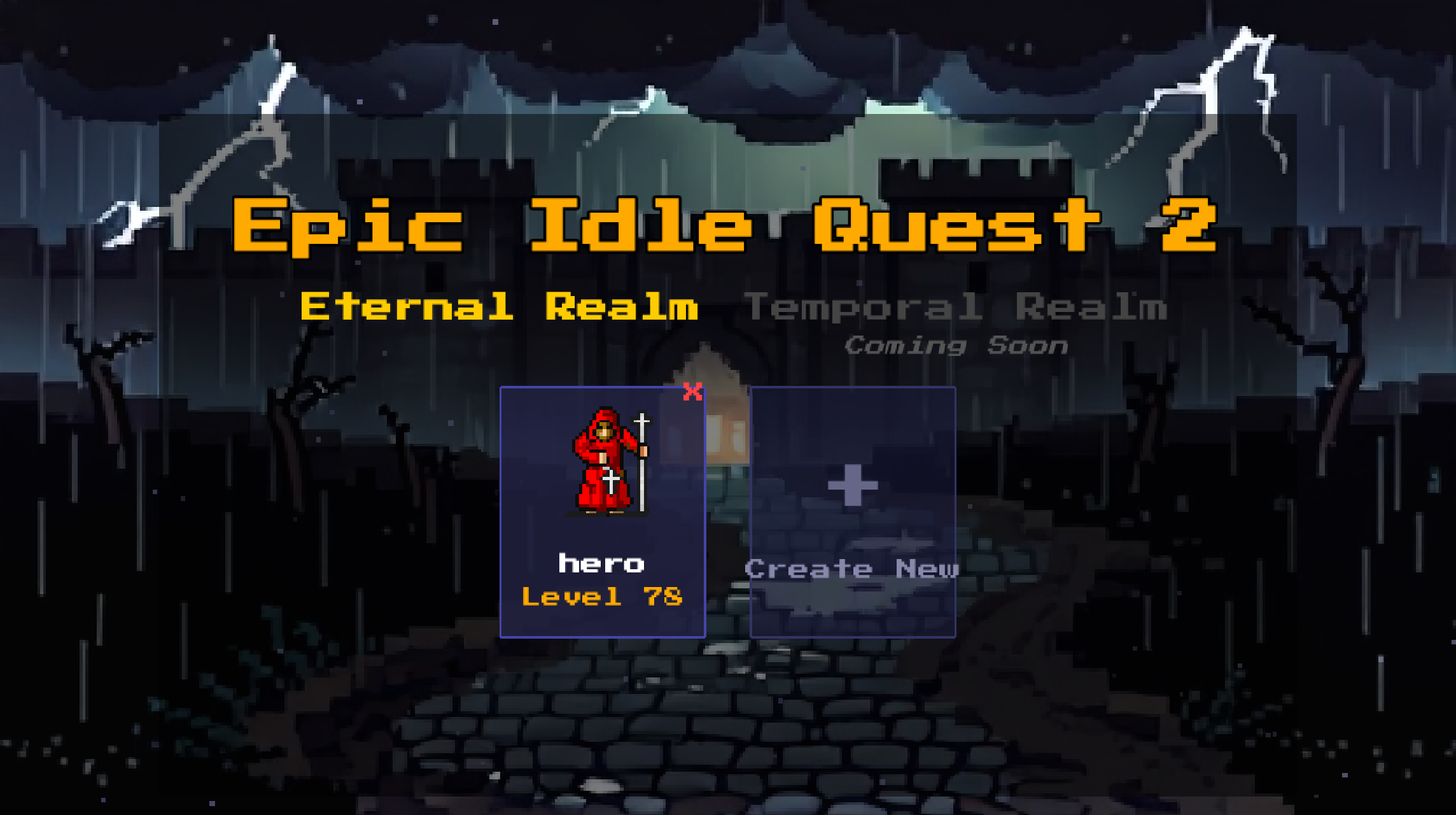
> eiq2.sh Loot Craft Brawl Repeat
Competitive idle RPG. Server-authoritative. No cheating.
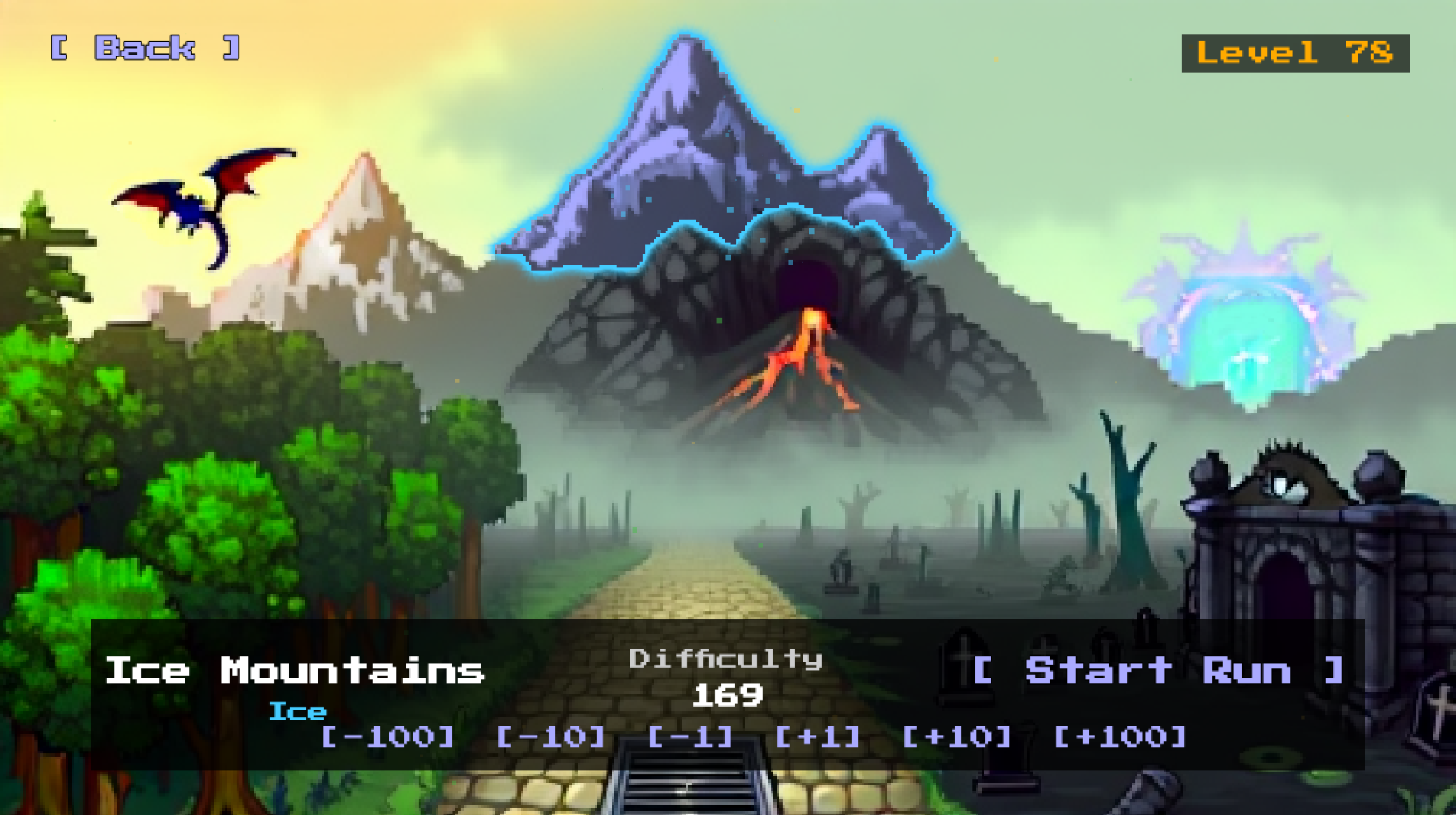
Pick one of 8 areas, set a difficulty (1–9,999). Your hero fights waves of enemies automatically. Collect gear, retreat to town, equip upgrades, salvage the rest, smith your best items, push deeper.
Farm actively for gear upgrades via short runs on high difficulty or nightmare bosses, reforge weapons and armor, browse the shop or push your PvP rating.
No time but still want to progress? Setup low difficulty runs, close the tab. The server keeps fighting for you. Come back mid-fight or hours later — see a full summary of what happened, collect your loot, pick your level-up skills.
Successor to Epic Idle Quest (2018), which is still online after 8 years — and will stay that way. EIQ2 is built with the same commitment: the server stays on, your progress is permanent. All game logic runs server-side. No client-side cheats, no save editors. If you're on the leaderboard, you earned it.
Who will climb the top ranks of the eternal leaderboard? You? No level cap, no resets, the server never shuts down.
More into sprints? Compete in temporal realms, carve your name into the season‑x leaderboard forever, and earn unique account-wide rewards to show off your prestige.
Or both? Play in a browser tab while you work, on your phone during commute, or on Steam. Progress syncs across platforms. Free to play, no pay-to-win.
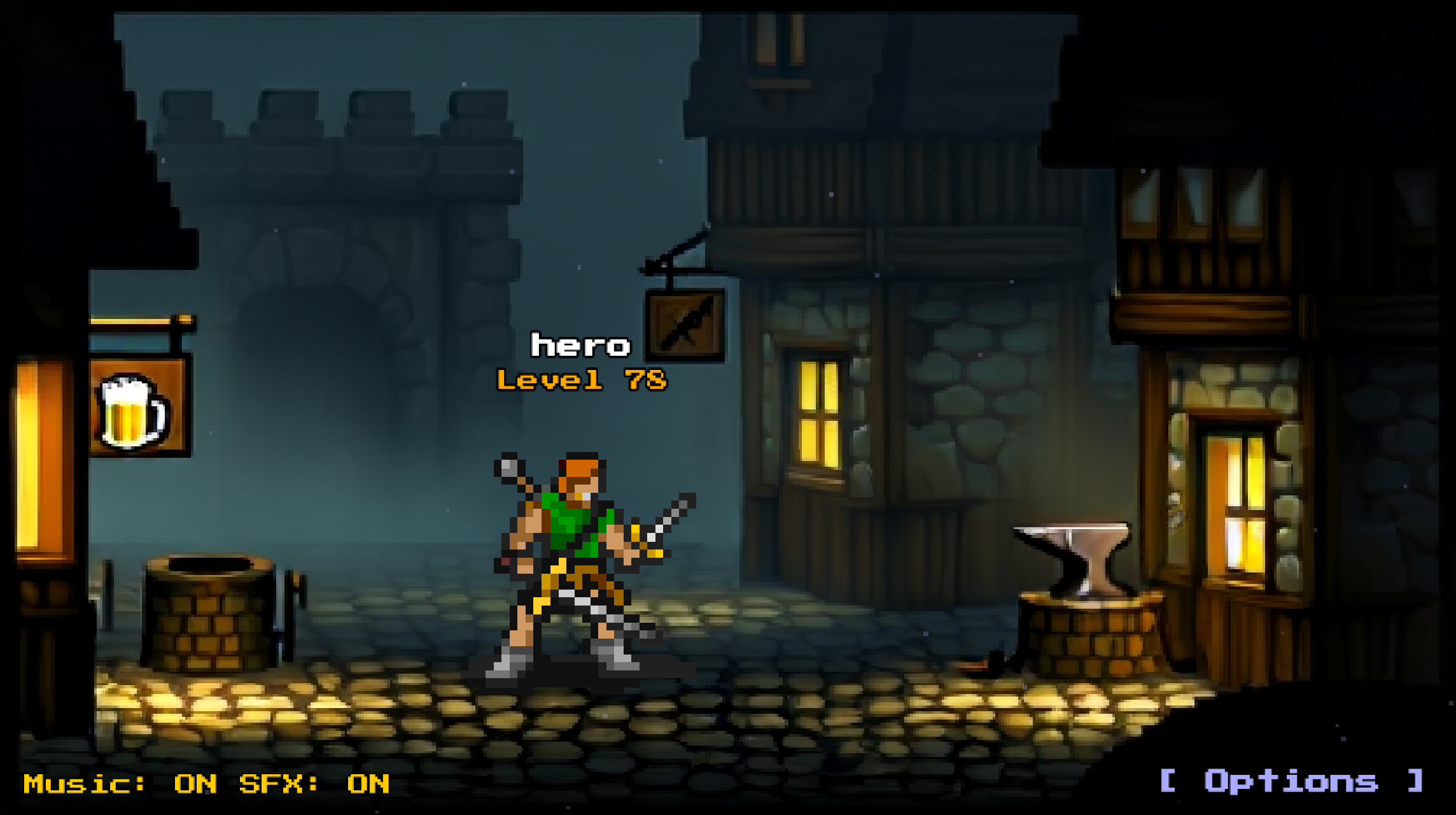
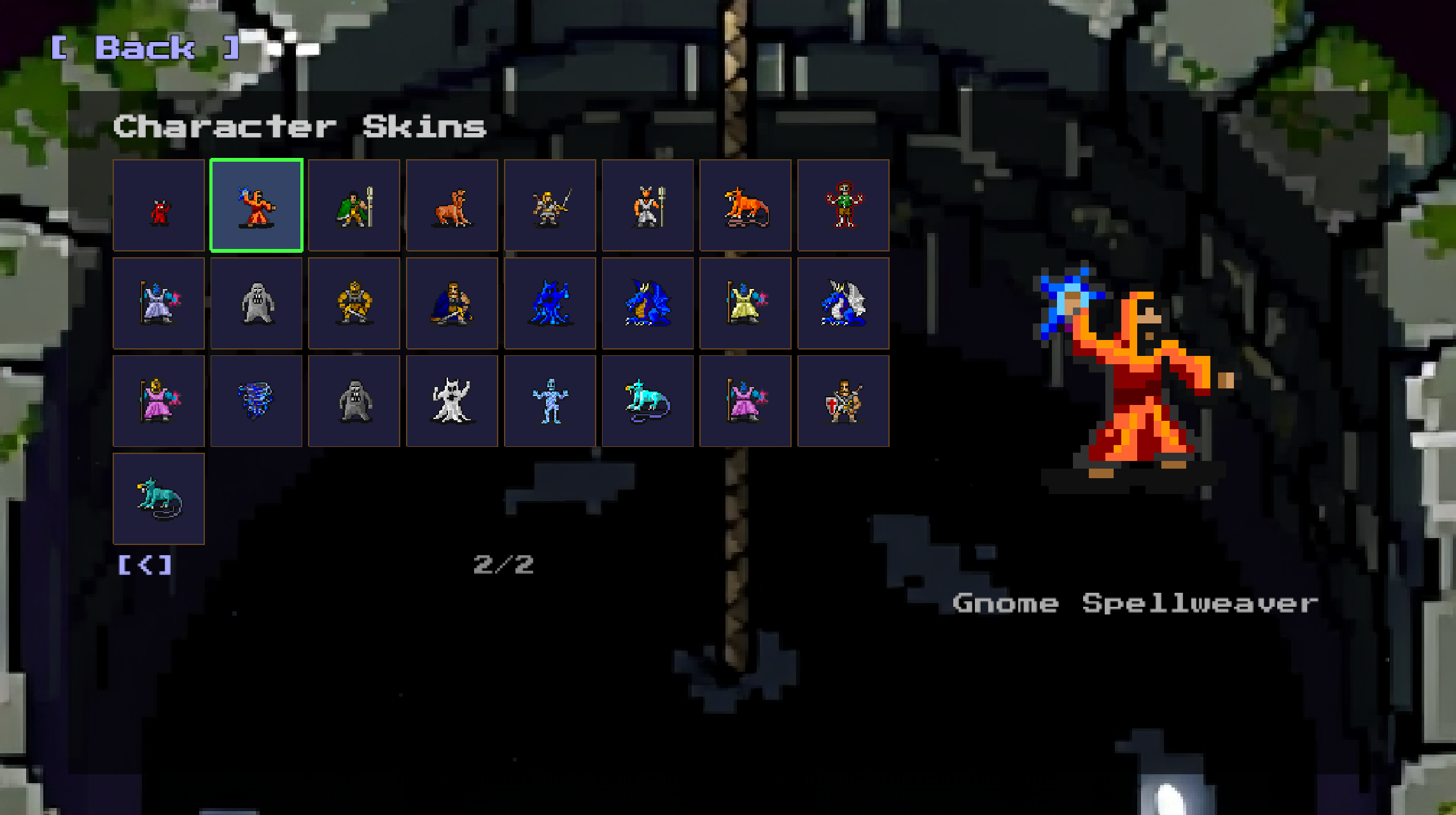
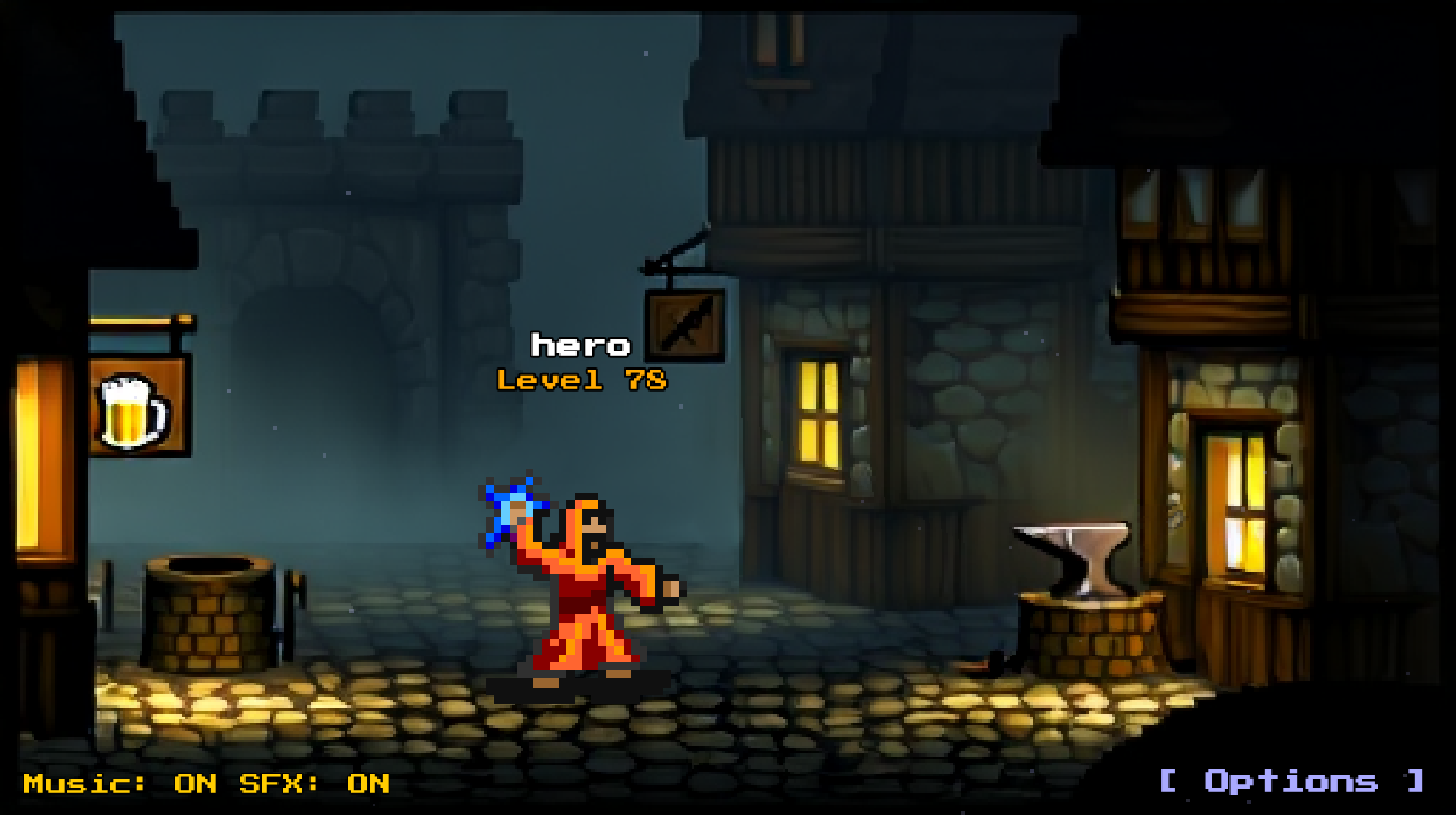
New to Epic Idle Quest 2? Here's what your first evening looks like. Sign in with Google, or create a Guest account with a username and password — no email required, no app install needed to try it. You pick a name and land directly in the town hub. You start with two skin options and can change between them in town, but the real collection happens in play: defeating boss monsters unlocks their skins for your hero, and over time your library grows into the hundreds. From town, click the gate to open the area map.
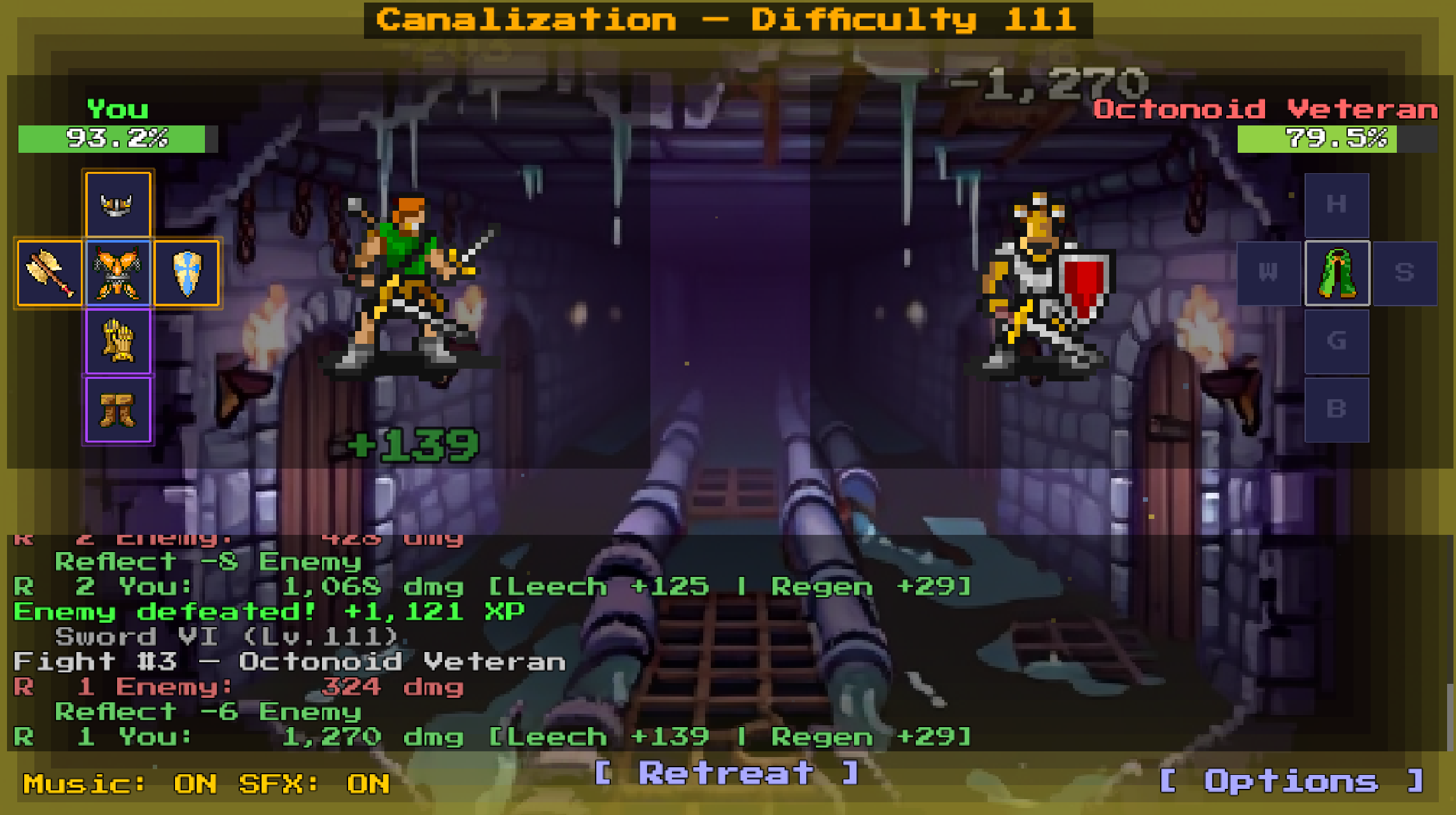
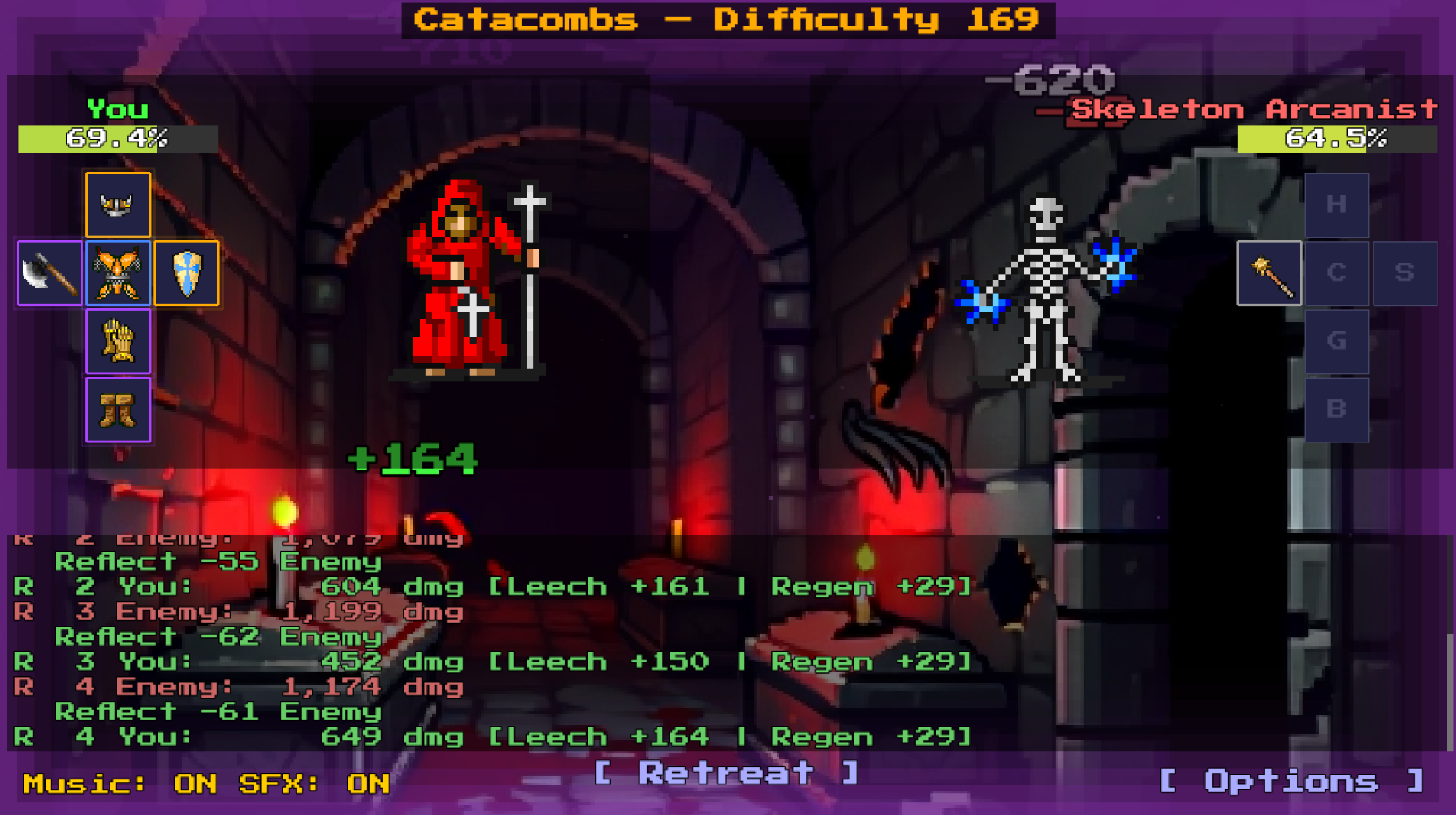
Start in Verdant Woods at difficulty 1. This is the tutorial zone. On your very first adventure your hero is effectively naked — no weapon, no armor — and you'll barely scrape past the first couple of enemies. But defeating them will most likely drop you a basic weapon and a few armor pieces, and from there the journey begins. Your hero fights automatically: you watch damage numbers fly, loot fill your backpack, and health bars rise and fall.
During fights themselves, there is nothing you can do to influence the outcome. But the decisions you make between runs determine your effectiveness — skill picks, gear choices, smithing, merchant shopping, which area you visit and at what difficulty. That's where the depth lives. You can specialise in pure survivability, an unkillable tank, a raw damage bruiser, a crit-focused glass cannon, or any mix of the above.
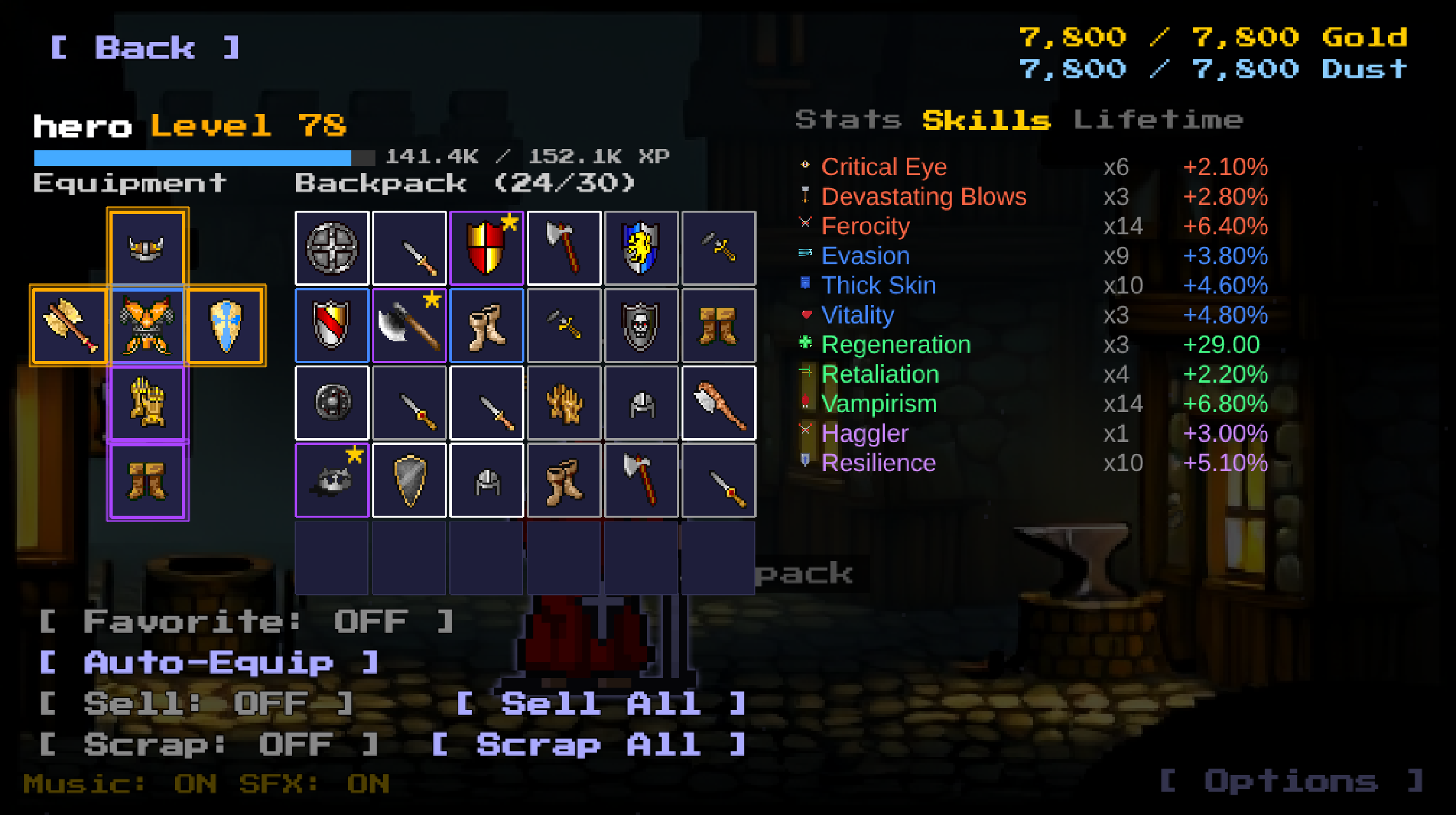
Every level-up earns you a skill pick. After the run ends, a three-card choice is offered from a pool of twelve skills across four categories: offensive like Ferocity (+% base damage), defensive like Thick Skin (+% all-element resist), sustain like Regeneration (HP per round), and utility like Haggler (+% salvage gold). Every skill has scaling decay — the first pick in a skill gives full value, later picks give less — so specialising pays off. Each offer also has a small chance to roll at double or triple value, and you'll see that before you commit.
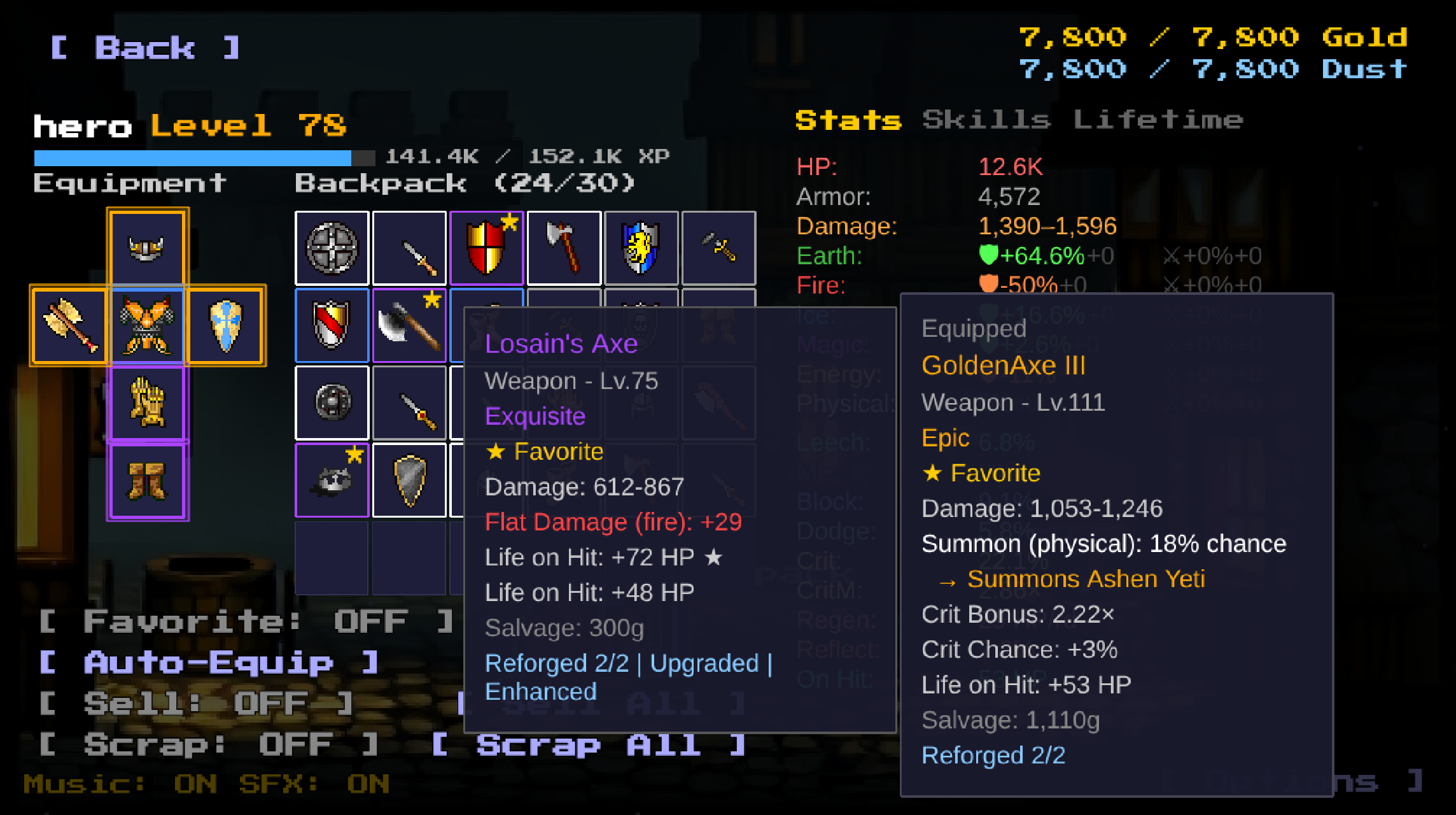
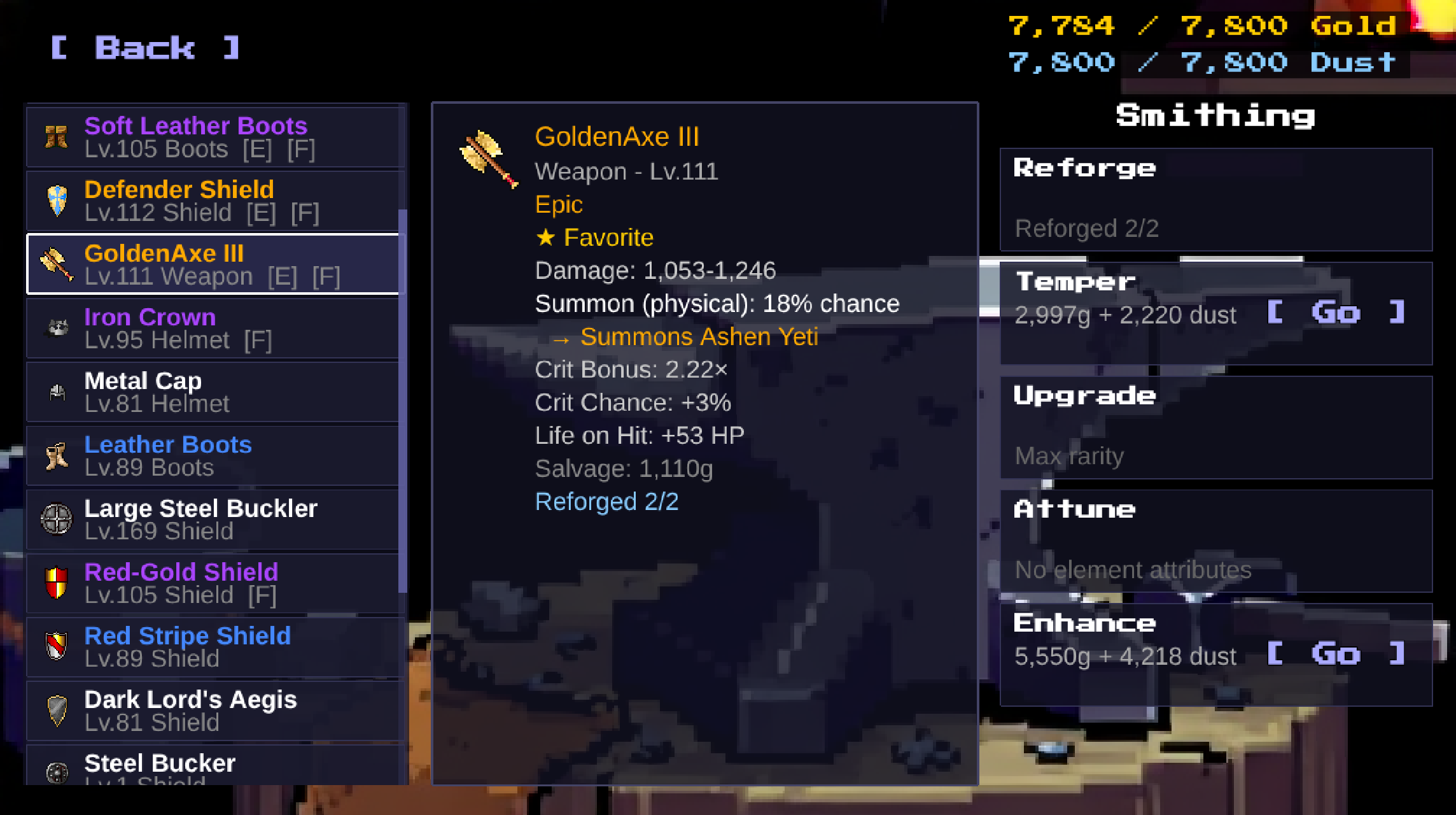
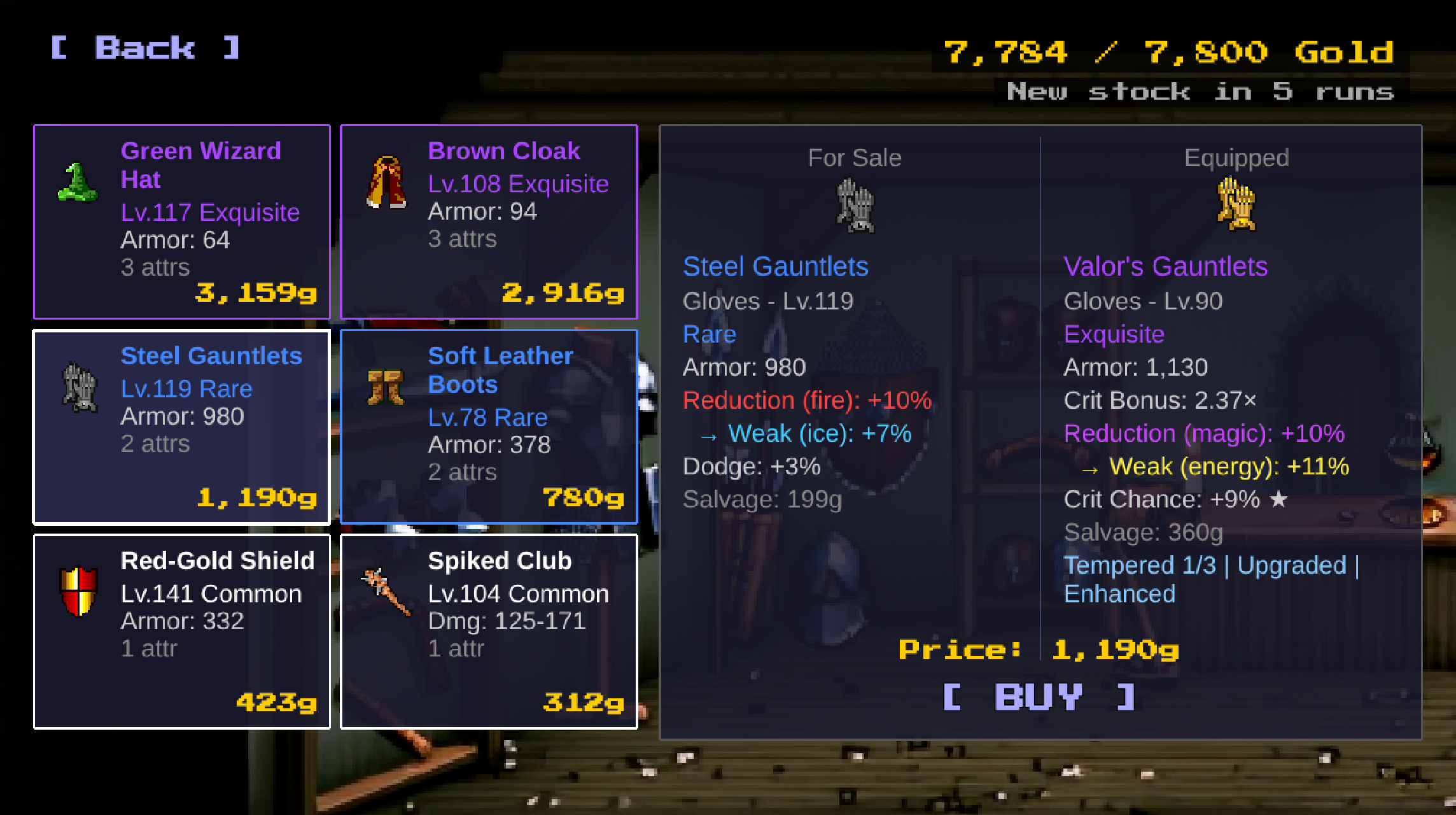
When you just looted a fancy new weapon or a shiny armor piece — you saw it on the enemy before it died, spotted it in the fight log, or checked your travel backpack — hit retreat to equip it directly. Or retreat simply because your backpack is full and you want to sell the haul for gold or scrap it for dust. Alternatively, wait until you fall and your run ends "naturally" — should be clear, but not advisable for hardcore characters. Back in town, open the backpack to equip upgrades, favorite the items you want to keep, and salvage the rest. The merchant stocks six items (one per slot) that refresh every five runs — check it regularly, the vendor often stocks gear noticeably stronger than drops at your current level.
Around level three you unlock the second area, the Murky Swamp. Each of the eight areas has its own element, its own monsters, and its own loot table. Where you farm matters as much as where you fight: each area drops resist gear tuned to help you survive a different area later. That's the core progression loop — visit many places, build a balanced kit or a specialised one, gain levels, then push deeper.
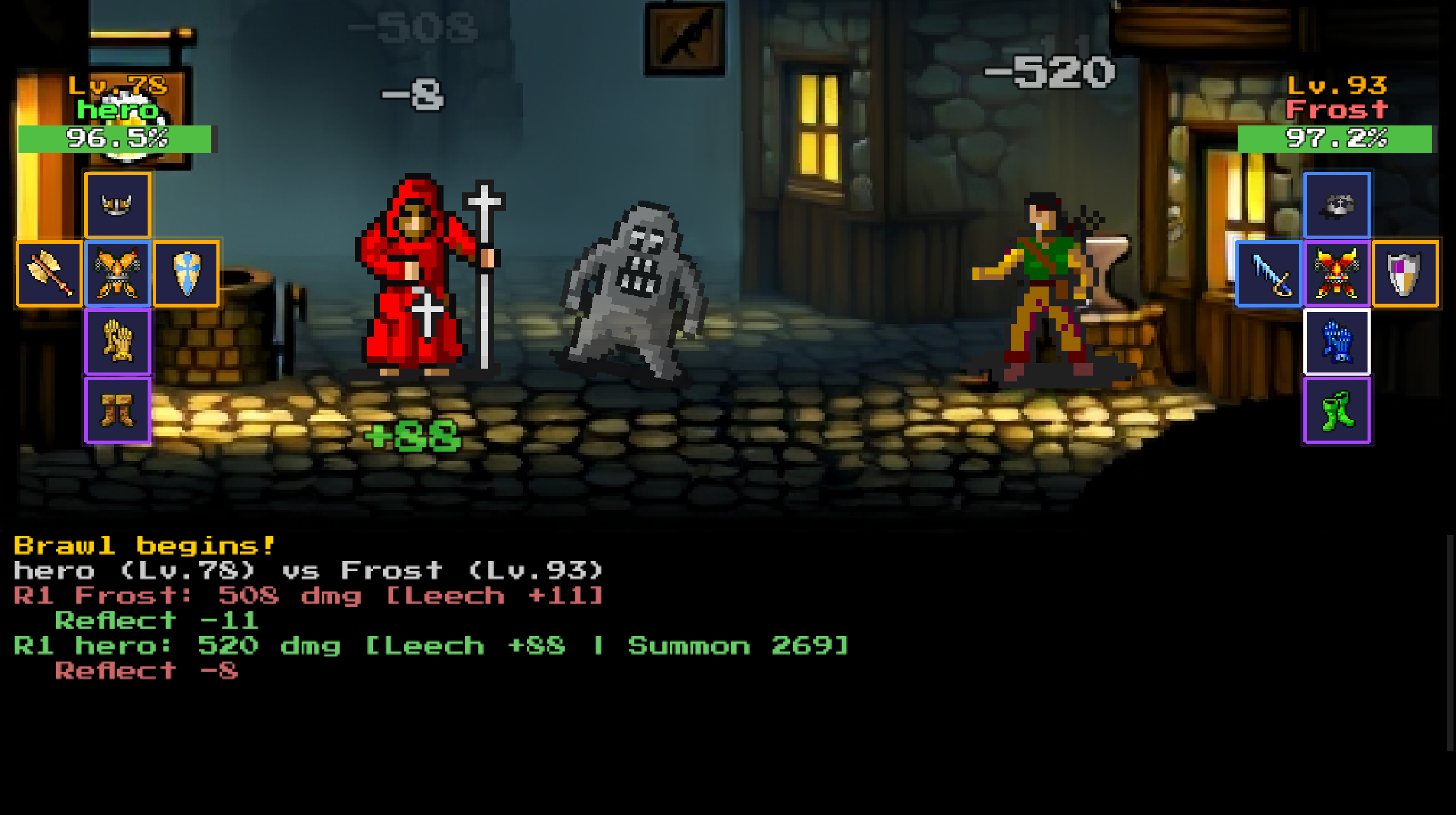
Combat is turn-based. Your hero and the enemy take turns attacking based on an initiative roll, trading blows until one side hits zero HP. A round cycles through both attackers and any sustain effects (heal over time, life leech, reflect). Early fights at low difficulty can end in two or three rounds; tough fights against boss monsters at the edge of your gear can stretch into dozens. Everything — damage rolls, crits, dodges, loot drops — is calculated on our servers. The client is a pure display layer, so your stats cannot be modified locally, and neither can anyone else's. If you're on the leaderboard, you earned it.
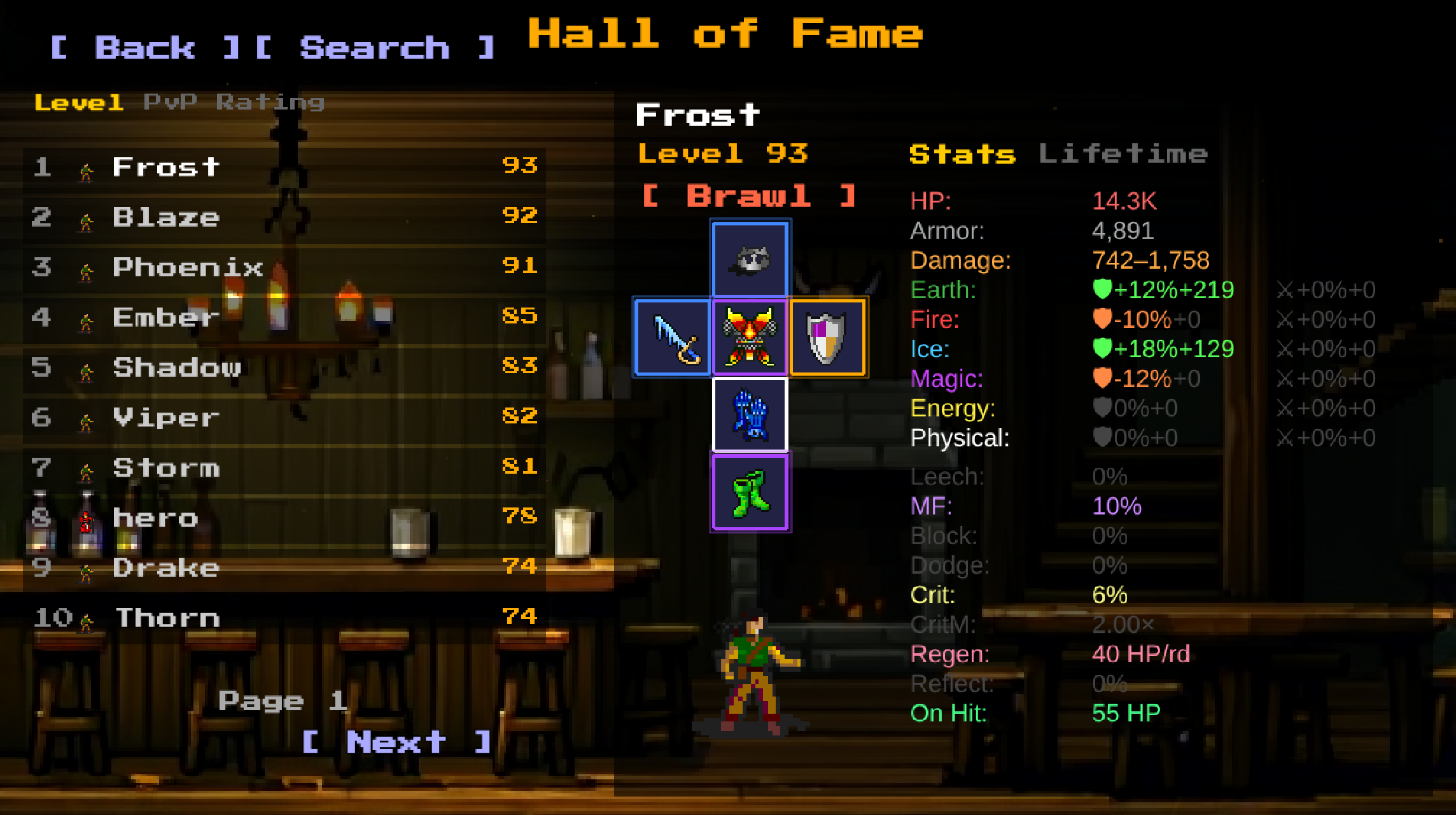
Items can roll well beyond a simple damage or armor number. Magical weapons and armor carry secondary attributes that reshape how a fight plays out: crit chance and crit multiplier for damage spikes, dodge and block for mitigating hits, life leech and heal over time for sustain, reflect to punish attackers, and on rare boss weapons a summon attribute that procs a familiar to fight alongside you. All chance-based stats (crit, dodge, block) hit soft caps at 50% — after that you need twice the raw stat for the same effective gain, then three times, and so on. You'll see red arrow indicators in the stats panel when you're past a cap. The upshot: diversifying beats hyper-stacking.
On top of raw stats sit six elements: Physical, Earth, Fire, Ice, Magic, and Energy. Every weapon deals physical damage by default — and magical weapons stack extra elemental damage on top of that baseline, layering one or more of the five elements into every hit. This is the core of offensive builds: monsters in every zone carry a 50% resistance to their own element and a 50% weakness to the element that counters it. Show up to the Volcanic Caves with an ice-tuned weapon and enemies crumble; bring a fire-tuned one and most of your extra damage fizzles on contact.
Armor works by the same logic. Baseline armor blunts all incoming damage universally, but magical armor layers element-specific resistances on top. This matters because enemies deal roughly 60% of their output in their dominant element — the one they already resist. A single well-targeted resist piece can stop more incoming damage than three generic upgrades combined. Stacking resistance is powerful — but here's the twist.
Every non-physical resist creates a weakness to the element that counters it. Earth resist makes you weak to Fire. Fire resist makes you weak to Ice. Ice to Magic, Magic to Energy, Energy to Earth — a circular chain. The same rule applies to enemies: a Fire-area enemy resists Fire damage but is weak to Ice. This means the optimal strategy is not "stack one resist" — it's matching your gear to where you're going. A fire-resistant kit that crushes the Volcanic Caves will get torn apart by Ice Mountain enemies.
Loot geography compounds the puzzle. The Volcanic Caves drops Ice resist — gear you'll want for the next tier up, not the area you just farmed. To survive Volcanic (a fire zone), you farmed fire resist from the Catacombs earlier. Each area prepares you for a later one, not the one you're standing in, so you cannot skip ahead: progression pulls you through the full rotation, building a layered kit along the way.
At difficulty thresholds around 1,000 you enter the endgame: enemy damage multipliers climb, all monster tiers start appearing (great for skin farming), and the Ancient rarity — a tier above Epic, with five attribute slots — starts dropping in Shadow Realm and Dragon's Lair. Want to dig deeper? The full mechanics, formulas, and charts live in the wiki.
Looking for exact formulas, damage tables, or deep mechanical detail? Every system is documented in depth across the eight pages of the wiki. The FAQ below takes the opposite angle — plain-prose answers to the questions players most commonly ask, aimed at the bigger picture rather than the numbers.
Yes, free. No, no pay-to-win. Epic Idle Quest 2 is a hobby project by a solo developer with a full-time job and kids — there is no monetisation model built around selling power. The Android app shows optional rewarded-video ads: a small 10% XP boost and 6 extra inventory slots to store your loot, granted for 1 hour after watching a short ad video. The upcoming Steam release will be a one-time purchase: no ads, no microtransactions, boost always on, for as low as $2.99 / €2.99. Your character on the web, Android and on Steam will be the same character.
True for the very early game — the first couple of levels reward active play while your gear is still catching up. Once you're past that initial stretch, the idle loop opens up. Pick a difficulty low enough that your hero cuts through many enemies comfortably, or even one where you don't die at all. Set up a run (takes about 10 seconds), close the tab or the app, and your hero keeps fighting on our servers. Come back hours later to a list of levels gained, a backpack full of loot, and fresh skins acquired from boss kills. Both modes coexist: active play when you want to push, idle play for the long stretches in between.
Every boss monster you defeat gives you a chance to unlock its skin — a new sprite you can equip on your hero from the Well. But there's a level gate: the boss must spawn at or above your character's level at the start of the run. If you kill a boss that's below your level — usually on very low-difficulty farming runs — the game shows "the soul is too weak to capture" and no skin roll happens. To collect new skins, push into difficulties where enemies match or outlevel you. Your first boss-skin unlock is guaranteed; every subsequent eligible kill rolls against a drop chance.
Nothing bad. The server keeps fighting on your behalf — this is called a headless run. Come back five minutes later to continue watching your live run, or five hours later, and you'll see a summary of everything that happened while you were gone: fights completed, loot collected, levels gained, skins acquired. This works on mobile data, on flaky WiFi, even if your laptop goes to sleep. Only a server crash would end a run early (very rare, and the host has uptime monitoring).
No level cap. The Eternal realm never resets — the original Epic Idle Quest from 2018 is still online eight years later, and EIQ2 is built with the same commitment. If you climb into the top ranks, your name stays there until someone outscores you. Difficulty goes up to 9,999 (and we'll lift it if anyone reaches it).
The first season is currently planned for roughly two weeks after the Steam launch. Steam is targeting mid-May 2026, which puts Season 1 at approximately 1 June 2026. Dates are tentative — watch the news page for the final announcement.
Active seasons run on a separate world called the Temporal realm. When a season starts, everyone rolls a fresh character there — blank slate, brand-new leaderboard, nobody's ahead. Seasons always feature guaranteed boosted XP as the headline modifier, plus potentially other twists to be decided per season. The XP boost also serves as a great on-boarding window: new players can catch up to long-standing Eternal-realm characters in a reasonable amount of time.
At the end of a season, account-wide rewards are granted. Some may go to every participant, others are rank-based (top X on the seasonal leaderboard), and some seasons may combine both. Rewards can range from unique skins you can't collect anywhere else to unique pets with special abilities that stay on your account forever. Your seasonal character is automatically transferred from the Temporal realm to the Eternal realm when the season ends — they don't vanish, they join your permanent roster. The final seasonal leaderboard is frozen and archived on the Hall of Fame, so your placement remains visible for all time.
One life. When you create a character you can flag it as Hardcore. If that character dies in a run or to a Nightmare boss, they are permanently frozen — you can still view them on the Hardcore leaderboard with a skull icon, you can still brawl them in PvP as a living monument, but they cannot fight again. Their name is retired. No undo, no bailout. Death is real.
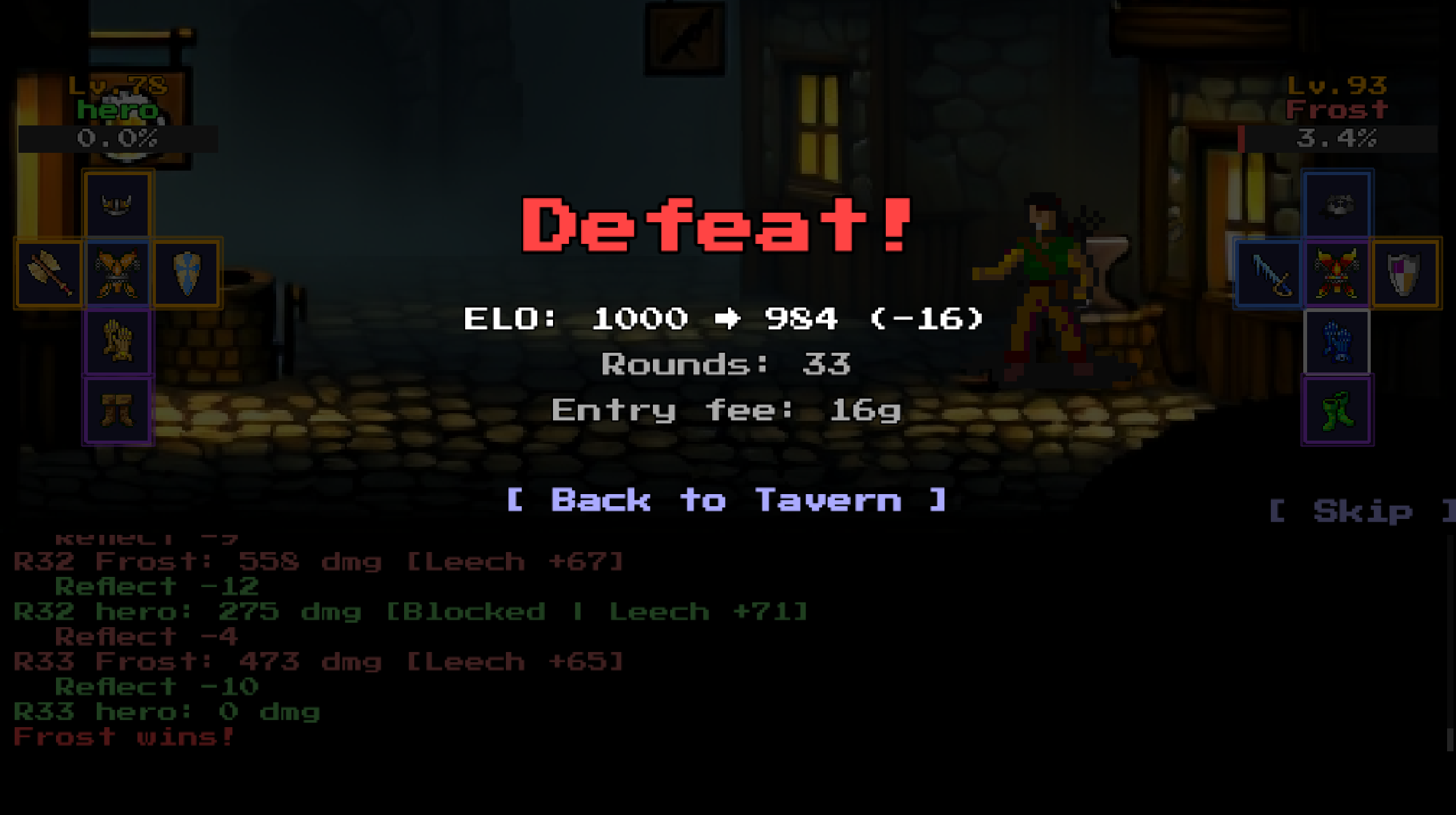
Asynchronous. Open the tavern, browse the PvP rankings or search for an opponent by name, and click Brawl. The server loads both characters' current gear, runs a full fight, and returns the round-by-round result. You watch the replay in the Duel Scene with equipment tooltips and a fight log. Rating uses ELO (K=32, starting 1,000), so mismatches self-correct. Anti-farming: 1-minute global cooldown, 1-hour per-opponent cooldown, 20 duels per day. Guest accounts cannot PvP — link a Google account to unlock.
A rare drop (ca. 1% chance past difficulty 5) that summons an amplified boss fight. The scroll stores a specific monster from the area it dropped in, with randomly rolled HP and damage multipliers — typically 3–8× the regular HP and 1–2× the regular damage. Using the scroll triggers a one-off boss fight outside your normal run, with loot and XP rewards roughly double what a single kill of that boss would give. They stack in your backpack and in the town stash.
Yes. The Android app is on Google Play, and the browser version works on mobile browsers as well. Same account, same characters, same leaderboard. iOS is not supported yet. Steam is coming.
Progression naturally slows as you climb, and that's partly by design. With no level cap and an infinite difficulty ladder, the game cannot realistically cater to constant high-frequency progression at every point on the curve — and frankly, not every player wants a dopamine hit every five minutes. After you've farmed the right baseline weapon, pushed for the rarity you wanted, and spent the gold and dust to smith it exactly how you like, many players prefer a stretch of runs where they get to actually enjoy their new toy before replacing it again within the next moment.
There are two main options. The first is to improve gear via heavy active play: take on harder difficulties, maybe ones where you're only able to kill a handful of enemies. Loot from difficulties way above your level can net you extraordinary upgrades if you get lucky, and short runs at high difficulty also refresh the merchant stock more frequently.
The second option focuses on gaining character levels. The easiest way to grind levels is headless idle runs: pick an area and difficulty where you won't die, set up a fight (takes about 10 seconds), then close the tab or the app. Your hero keeps fighting on our servers. Come back hours later, collect the accumulated loot and XP, start a new run, repeat. Low difficulty won't flood you with fancy drops, but it'll steadily stack up character levels for almost no time investment — and higher levels automatically unlock the ability to push meaningfully higher difficulties, which is where top-tier gear actually drops. The wiki has more detailed progression tips.
Servers are in the EU. We store the minimum needed to play: an account identifier (your Google ID or a bcrypt-hashed guest password), your character data, and anonymous stats. We do not sell data. Full details are in the privacy policy. Characters can be deleted from the client at any time; that removes all associated items, stats, and records.
Epic Idle Quest 2 is actively developed. Here's what's coming next.
Released
Native Android app on Google Play. Free download, same servers.
In Progress
Standalone desktop client with hundreds of achievements.
In Progress
Link your Google and Steam accounts so your progress carries over. Start on the web, continue on Steam — same characters, same gear.
In Progress
Seasonal resets with fresh leaderboards. Compete for top ranks each season, unlock unique account-wide rewards, then migrate your character to the permanent Eternal Realm.
Released
Permadeath. One life, one shot at the leaderboard. Dead heroes stay as monuments.
Details TBD
Server-wide challenges and cooperative boss encounters.
Mostly intended for you as players to chat, theorize and in general share your experience with the game.
There's also a feature-request channel. No guarantees (solo dev, hobby project, other full time job and kids), but it eventually will serve as backlog until the roadmap items are done. And please, one idea per message, one message per idea.